

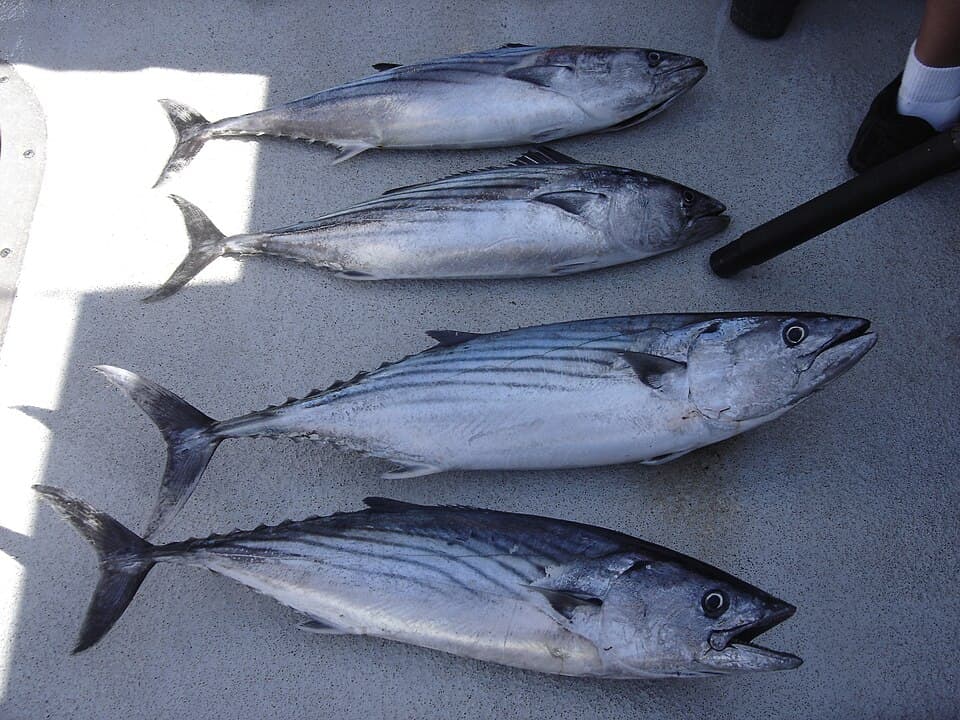
Photo: Jerry Kirkhart · CC BY 4.0 · 1/3
Pacific Bonito
Sarda chiliensis
The fastest, most thrilling gamefish taken from Southern California pier rails. A miniature tuna capable of blistering drag-screaming runs across open water.
Monthly Seasonality & Run Timing
12-Month CalendarOffshore/warm water pockets only; rare on piers.
Cold water absence.
Cold water.
Occasional offshore sighting.
First offshore schools arrive in Southern California Bight.
Early arrival on outer deep-water piers (Redondo, Balboa, Oceanside).
Peak summer pelagic run; surface boils around T-ends.
Explosive surface casting on spoons, splasher eggs, and feather jigs.
Heavy feeding on anchovy and sardine schools.
Late-season large 'boneheads' active on outer rails.
Action wanes as coastal water temperatures cool below 62°F.
Winter departure.
Feeds predominantly in the surface habitat.
Active feeding thermal band in SoCal.
Peak bite frequency during tide movement.
Optimal lighting and foraging activity.
California Fish & Wildlife Regulations
24 inches fork length or 5 pounds, EXCEPT that not more than 5 fish per day may be less than 24 inches or 5 pounds.
10 fish per day (max 5 sublegal under 24 inches).
- 14 CCR § 28.32:View official California Department of Fish and Wildlife regulation ↗· reviewed 2026-08-28
Recommended Terminal Rigs for Pacific Bonito
Tested terminal configurations, mainline, leader diameters, and hook sizes.
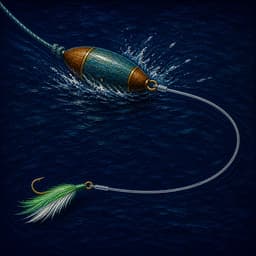
Bonito Casting Splasher (Casting Egg + Feather)
Wooden casting float/egg trailing a 4-foot leader with a green/white feather jig.
Where to Fish for Pacific Bonito in SoCal
3 Piers & Jetties in Pier Scout“Small metal jigs, live bait, or strips of mackerel when pelagics push through the outer rail; warm-water years improve the odds, according to the local pier report.”
“Surface iron, spoons, feathers or small baitfish when schools push past the head; local Redondo reports call out bonito, but waves limit safe access.”
“A 2022 Corona del Mar jetty report documents bonito. Cast only from a secure position and keep all casts outside the marked entrance channel; moving water and vessel traffic can end a session immediately.”