

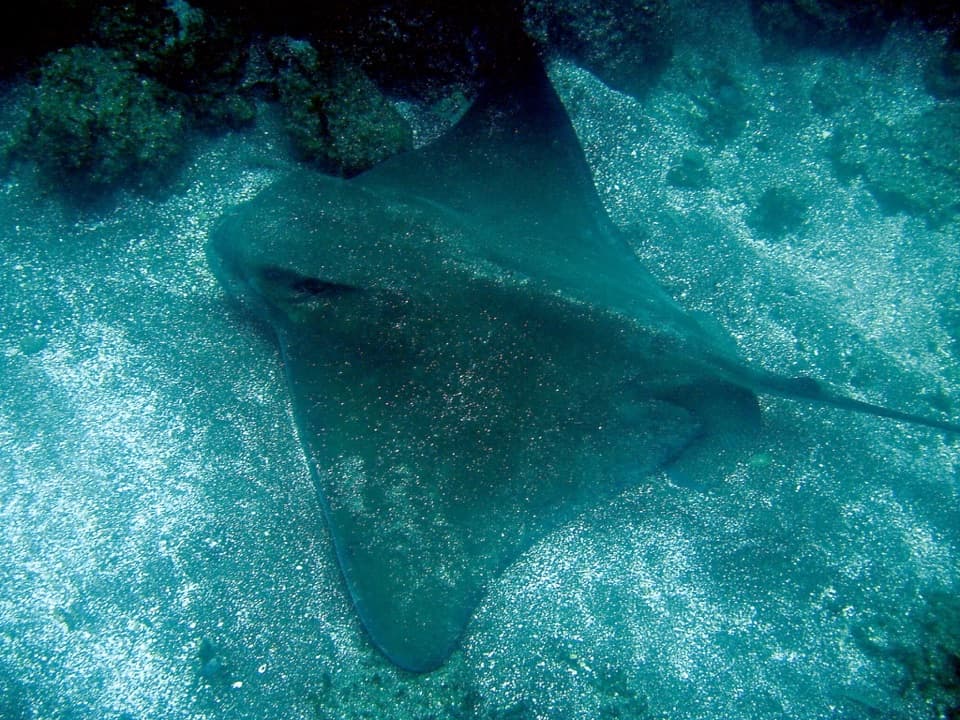
Photo: Claire Fackler, CINMS, NOAA · Public domain · 1/3
Bat Ray
Myliobatis californica
Affectionately dubbed the 'Mud Marlin' for its immense size (often 50–100+ lbs) and prolonged freight-train runs. Feeds on mollusks and crabs by digging pits in the sand.
Monthly Seasonality & Run Timing
12-Month CalendarDeep offshore winter holding.
Cold water.
Slow.
Early season scouts in shallow bays.
Arrival of warm-water schools on sand flats.
Peak summer heavyweight runs ('mud marlin').
Massive rays feeding on squid and crabs at night.
Exceptional testing of heavy tackle.
Large trophy females active on outer rails.
Action slows with cooling water.
Late autumn dispersals.
Winter lull.
Feeds predominantly in the bottom habitat.
Active feeding thermal band in SoCal.
Peak bite frequency during tide movement.
Optimal lighting and foraging activity.
California Fish & Wildlife Regulations
No minimum size limit under general finfish rules.
10 fish per day within the 20-finfish general combined limit.
- 14 CCR § 27.60:View official California Department of Fish and Wildlife regulation ↗· reviewed 2026-08-28
Recommended Terminal Rigs for Bat Ray
Tested terminal configurations, mainline, leader diameters, and hook sizes.
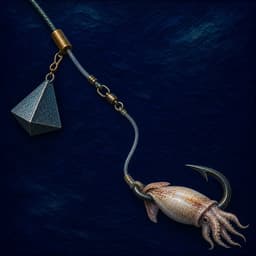
Heavy-Duty Bottom Sinker Rig
Heavy 40–50 lb tackle with large circle hook designed to handle sustained 50+ lb ray runs.
Where to Fish for Bat Ray in SoCal
0 Piers & Jetties in Pier ScoutThis species is caught across open Southern California beaches and coastal waters.